
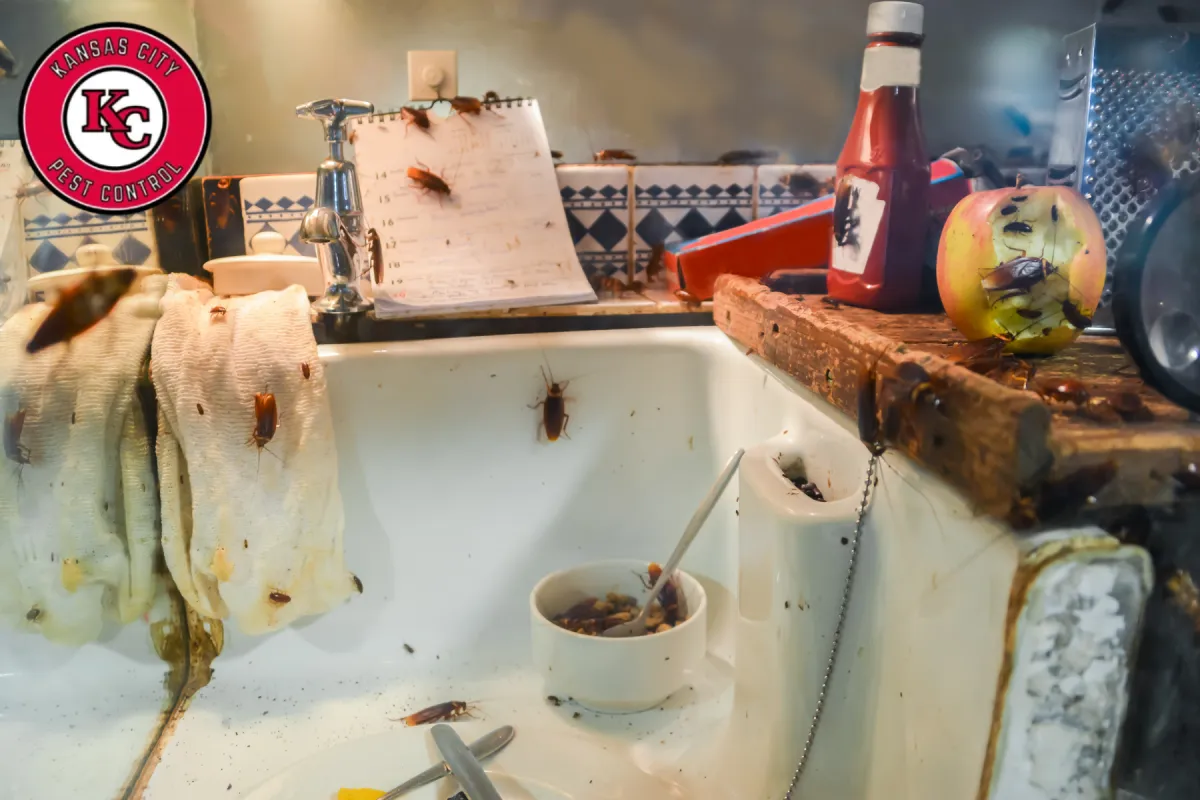
Homeowners can find where cockroaches are entering by checking for droppings, egg cases, shed skins, and repeated sightings near possible access points. Inspect gaps around pipes, doors, windows, vents, and wall cracks, but remember that cockroaches may also be hiding or breeding inside the home. Finding the likely route helps you choose the right steps to address the problem.
What Are the Most Common Places Cockroaches Enter a Home?
Cockroaches look for food, water, and shelter. Small gaps can give them access to a building, while dark, damp spaces provide places to hide. Start your inspection in areas where you have seen cockroaches or found signs of activity.
Gaps Around Pipes and Plumbing
Check beneath kitchen and bathroom sinks, behind toilets, and around pipes that pass through walls or floors. Openings around plumbing can connect rooms to wall cavities and other hidden spaces.
Look closely where pipes enter cabinets. If you see cockroaches near a sink, inspect the surrounding area for gaps, droppings, and moisture. The insects may be using a nearby opening, but they could also be moving from a hiding place elsewhere.
Doors, Windows, and Garage Openings
Exterior doors, windows, and garage openings can provide access when seals are damaged or gaps remain open. Inspect door sweeps, weatherstripping, window frames, and the edges of garage doors.
Pay attention to worn seals, cracks around frames, and gaps beneath doors. These areas deserve a closer look if cockroaches repeatedly appear near an outside entrance.
Cracks in Walls, Floors, and Foundations
Inspect cracks around baseboards, wall joints, floors, and foundations. Also check where utility lines enter the building and where cabinets meet walls.
Not every crack is an active entry point. Look for other evidence nearby, such as droppings, shed skins, or repeated sightings, before deciding which gaps to address first.
Vents, Drains, and Shared Building Spaces
Check the areas around vents, floor drains, and utility openings. In apartments and attached homes, cockroaches may also move between units through shared plumbing spaces, wall cavities, or other openings.
Do not assume a drain is the source simply because you see a cockroach in the bathroom or kitchen. The insect may have entered through another gap or traveled from a nearby hiding place.
What Signs Can Help You Trace Cockroach Activity?
A single sighting tells you where a cockroach was, but it may not reveal where it entered. Droppings, egg cases, shed skins, and repeated sightings can help you narrow down the areas that need closer inspection.
Follow Droppings and Smear Marks
Cockroach droppings may look like dark specks, small grains, or tiny cylindrical marks, depending on the species. Check inside cabinets, behind appliances, along wall edges, and near plumbing openings.
Dark smear marks may also appear in areas where cockroaches move frequently, particularly where moisture is present. These signs suggest activity, but they do not prove that the nearest gap is the original entry point.
Look for Egg Cases and Shed Skins
Cockroaches shed their outer skins as they grow. Some species also leave egg cases in protected areas. Look behind refrigerators, beneath sinks, around cabinet hinges, and in other dark spaces.
Finding these signs may point to a nearby hiding or breeding area. If they appear repeatedly, the issue may involve cockroaches living inside the home rather than occasional insects entering from outdoors.
Record Where and When You See Cockroaches
Cockroaches often hide in dark areas and come out to search for food or water. Record the room, approximate time, and location of each sighting. Note whether you see them near a sink, food storage area, appliance, or exterior door.
Use these steps to narrow down the likely source:
- Record each sighting. Note the room and the closest door, pipe, cabinet, or appliance.
- Inspect the surrounding area. Look for droppings, shed skins, egg cases, and visible gaps.
- Check possible access points. Examine nearby pipe openings, wall cracks, doors, and windows.
- Monitor the pattern. See whether activity continues in the same place or appears in other rooms.
- Address what you find. Clean the area, reduce moisture, seal suitable gaps, and seek professional help if activity continues.
Are Cockroaches Coming From Outside or Hiding Indoors?
Cockroaches can enter from outside, move through openings inside a building, or arrive in grocery bags, boxes, furniture, and appliances. The location of a sighting can offer clues, but it does not always reveal the original source.
| Clue | Possible outdoor entry | Possible indoor hiding area |
| Where you see them | Near exterior doors, windows, or garages | Behind appliances, inside cabinets, or beneath sinks |
| Physical evidence | Gaps that connect to the outside | Droppings, shed skins, or egg cases in protected spaces |
| Pattern of sightings | Activity near one exterior opening | Repeated activity in the same area or across several rooms |
| What to inspect | Door seals, window frames, and foundation gaps | Appliances, plumbing openings, cabinets, and other dark spaces |
These clues are not a definite diagnosis. The cockroach species, building layout, and extent of the activity can all affect where evidence appears.
If you are dealing with recurring sightings, pest control in Olathe, KS may be worth considering when cleaning and sealing visible gaps do not resolve the issue. A professional inspection can help identify likely access points, check for indoor activity, and determine the next steps.
How Should Homeowners Inspect Their Homes for Cockroach Entry Points?
A careful inspection can help you find likely routes without applying products unnecessarily. Start in places where food, water, and shelter are easy to find.
Follow This Home Inspection Checklist
1. Start in the kitchen. Check beneath the sink, behind the refrigerator, around the stove, and inside lower cabinets. Look for crumbs, moisture, droppings, and gaps around pipes.
2. Check bathrooms and laundry areas. Inspect the spaces around plumbing, washing machines, drains, and utility connections. Repair leaks and dry areas that remain wet.
3. Examine exterior openings. Check door sweeps, window seals, garage door edges, and visible foundation cracks. Repair damaged seals and close suitable gaps.
4. Inspect behind appliances and stored items. Cockroaches can hide in tight, undisturbed spaces. Move items carefully and look for signs of activity before cleaning.
5. Use monitoring traps when appropriate. Sticky traps can help show where cockroach activity is concentrated. Place them along walls and near suspected activity areas according to the product directions, away from children and pets.
6. Record what you find. Note where signs appear and whether activity continues after cleaning and repairs. This information can help you decide whether the problem needs further investigation.
For homeowners considering pest control in Olathe, avoid reaching blindly into dark gaps or spraying insecticides across surfaces without identifying the problem. Always follow product labels, particularly around food preparation areas, children, and pets.
Cockroach Control Myth: Sealing One Crack Will Solve the Problem
Sealing cracks and gaps can help reduce cockroach access, but it may not eliminate an infestation that is already established indoors. Cockroaches may be hiding behind appliances, inside cabinets, or within wall cavities. They may also be using other openings you have not found.
Another common mistake is assuming that the room where a cockroach appears is the room where it entered. A cockroach can travel from another area while searching for food, water, or shelter.
A more complete approach combines inspection, cleaning, monitoring, suitable treatment, and sealing access points. Removing food scraps and standing water helps make the home less attractive, while closing appropriate gaps can reduce access. If sightings continue, a closer inspection may be needed to find the source of the activity.
Applying Our Cockroach Control Methods to Solve This
Kansas City Pest Control uses several methods to address cockroach problems: baiting with insecticides, spraying with insecticide dust or liquids, setting up traps, and sealing off entry points. The appropriate approach depends on the signs of activity, where cockroaches are hiding, and the conditions inside the property.
1. Baiting With Insecticides
Cockroach baits contain an attractant and an insecticide. Cockroaches feed on the bait and are exposed to the active ingredient. Bait placement matters: it should be positioned in suitable areas where cockroaches are likely to find it, rather than placed randomly throughout the home.
Baits can help target cockroaches that travel through hidden areas. However, results depend on factors such as placement, competing food sources, the cockroach species, and whether the insects feed on the bait. Keeping food scraps and other accessible food sources under control can help support a treatment plan.
2. Spraying With Insecticide Dust or Liquids
Insecticide dusts and liquid treatments can be applied in suitable areas where cockroaches travel or hide. These may include certain cracks, crevices, and gaps near appliances or cabinets, depending on the product label and the conditions at the property.
Dusts and liquids are not interchangeable, and more product does not automatically mean better results. The product and application method should suit the area being treated. Applications must follow label directions, including instructions for use around people, pets, food, and sensitive surfaces.
3. Setting Up Traps
Traps help detect cockroach activity and show where insects are being caught. When placed in suitable locations, they can help identify areas that need closer inspection or further treatment.
Traps are especially useful for monitoring areas where cockroaches may be difficult to see during the day. However, traps alone may not resolve a larger infestation. Their placement and the pattern of catches can provide useful information when deciding what to do next.
4. Sealing Off Entry Points
Sealing suitable gaps around pipes, doors, windows, and other openings can reduce the routes cockroaches use to enter. Depending on the opening, repairs may include replacing worn door sweeps, improving weatherstripping, or sealing gaps around utility lines.
Sealing entry points is most effective as part of a wider plan when cockroaches are already active indoors. Exclusion can limit access, but cleaning, moisture control, monitoring, and appropriate treatment may also be needed.
For homeowners looking for Olathe pest control, these methods can be considered together rather than relying on one treatment alone. The aim is to address current activity, reduce conditions that attract cockroaches, and limit access where possible.

People Also Ask: Cockroach Entry Points
How do I find where cockroaches are coming into my house?
Follow repeated sightings and inspect nearby gaps around pipes, doors, windows, vents, and wall joints. Look for droppings, egg cases, and shed skins to help narrow down likely access or hiding areas.
Can cockroaches come through drains?
Cockroaches may access indoor spaces through plumbing-related openings or gaps around drains, depending on the species and building. A drain is not always the source, so inspect the surrounding area and look for other signs of activity.
Can cockroaches enter through tiny cracks?
Yes. Some cockroaches can fit through narrow gaps. Check around pipes, baseboards, door frames, windows, and utility openings, and seal suitable gaps where practical.
Why do I keep seeing cockroaches in the same room?
The room may have an accessible food or water source, a sheltered hiding place, or a route cockroaches use regularly. Repeated sightings are a reason to inspect the area, but they do not prove the exact entry point.
Does seeing one cockroach mean I have an infestation?
Not necessarily. A single cockroach may have entered from outside or arrived in an item brought indoors. Repeated sightings, droppings, egg cases, or activity in several rooms suggest the need for a closer inspection.
Will sealing entry points get rid of cockroaches?
Sealing gaps can help prevent cockroaches from entering, but it may not eliminate insects already hiding inside. Cleaning, moisture control, monitoring, and suitable treatment may also be needed.
Get Help Finding and Addressing Cockroach Activity
Finding where cockroaches enter can take more than spotting a crack or seeing an insect near a sink. Checking common access points, tracking repeated sightings, and looking for physical evidence can help you decide what to do next.
If cockroaches keep appearing despite cleaning and sealing visible gaps, Kansas City Pest Control can help assess the situation and recommend an appropriate approach. Our team provides pest control for homes and businesses, with clear communication and treatment methods selected for the property and the conditions found.
For pest control, call us today to discuss your concerns or schedule a service to learn more. You do not have to guess where the problem starts. A careful inspection and a clear plan can help you address cockroach activity and reduce the chance of it returning.