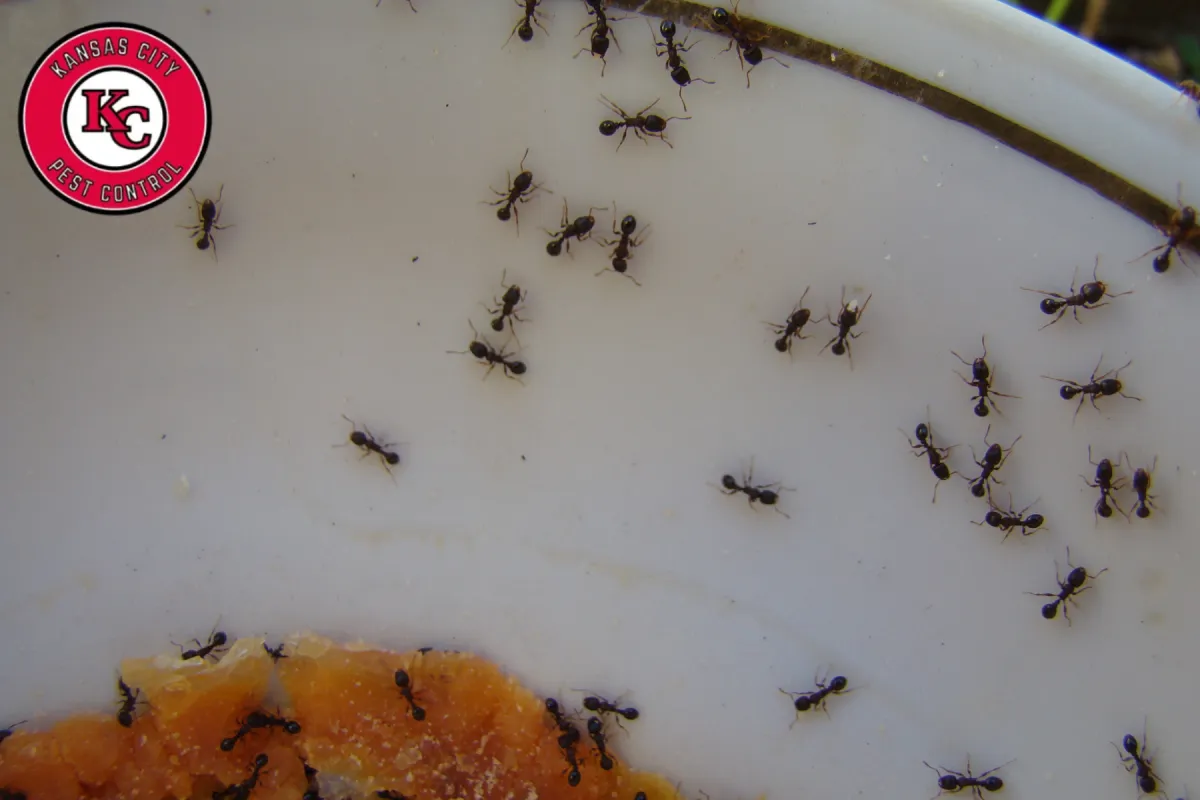
Ant baiting and insecticide sprays control ants in different ways. Baits attract ants to a product they may carry back to the colony, while sprays kill ants that contact the product or a treated surface. Baiting may help target a hidden colony, while sprays can provide faster visible results. The better option depends on the ant species, the location, and the extent of the infestation.
What Is the Difference Between Ant Baiting and Insecticide Sprays?
The main difference is how each method works. Ant bait uses the insects’ feeding behavior to deliver an insecticide, while sprays target insects exposed to the product. Both methods can help control an infestation, but neither is the best choice for every situation.
How Ant Baiting Works
Ant bait combines an attractive food source with an ingredient designed to control ants that feed on it. Worker ants find the bait and may carry some of it back to the nest, where other colony members can be exposed.
Many baits are designed to work slowly, giving ants time to feed and potentially share the product before it takes effect. This can help control colony members that are not visible inside the home. However, baiting depends on the ants finding and accepting the product.
Placement matters. Bait should be used near active trails or feeding areas where the product label allows. If ants ignore it or find other food more attractive, the treatment may not work as intended.
How Insecticide Sprays Work
Insecticide sprays can kill ants through direct contact or by leaving a treated surface, depending on the product. Contact sprays may kill exposed ants quickly, while some residual products are designed to remain active on approved surfaces for a period stated on the label.
Sprays can reduce visible activity, but killing the ants you see does not always eliminate the nest. Other colony members may remain hidden in walls, under floors, outdoors, or in other parts of the property.
The product and application area matter. Always follow label directions, especially around food preparation areas, children, and pets. Some sprays can also repel ants or interfere with bait feeding if used in the same area.
Ant Bait vs. Insecticide Spray: Which Works Better?
The better option depends on the problem you are trying to solve. Baiting may be more useful when the goal is to affect colony members beyond the visible trail, while sprays may provide faster results against exposed ants.
| Feature | Ant baiting | Insecticide sprays |
| Main purpose | Attracts ants to a product that may reach other colony members | Kills ants that contact the product or treated surface |
| Speed of visible results | Often slower | Contact sprays may act quickly |
| Potential to affect the colony | Yes, if ants accept and share the bait | Often limited to insects exposed to the treatment |
| Best use | Near suitable feeding trails and activity areas | In locations approved by the product label |
| Common limitation | Ants may ignore the bait or prefer other food | Visible ants may die while the nest remains active |
| Follow-up | Monitor bait use and changes in activity | Check whether activity returns and follow label directions |
| Safety considerations | Keep bait away from children, pets, and non-target animals | Follow all label precautions and application limits |
When Is Ant Baiting the Better Choice?
Baiting may be a good option when ants follow clear trails and a suitable product can be placed where they will find it. It can be especially useful when the nest is hidden or difficult to reach directly.
Baiting may be worth considering when:
- Ants repeatedly travel along the same routes.
- A suitable bait is available for the species.
- The insects are feeding on the bait rather than ignoring it.
- The goal is to affect colony members beyond those seen indoors.
- The bait can be placed where children and pets cannot reach it.
Be patient when using bait. Activity may not disappear immediately, and some products take several days or longer to reduce it. Follow the label instead of adding more bait or changing the treatment too quickly.
When Are Insecticide Sprays the Better Choice?
A spray may be appropriate when direct treatment of exposed ants is needed or when a labeled residual product suits the area being treated. The choice should depend on the species, location, and product instructions.
Sprays may be useful when:
- Exposed insects need to be treated directly.
- The product is labeled for the target pest and location.
- A residual treatment is appropriate for a permitted surface.
- An inspection identifies a suitable application method.
Spraying every visible trail is not always the best strategy. If the nest remains active, more insects may appear later. A targeted baiting plan or a combination of suitable methods may provide better control in some situations.
Why Ant Bait Sometimes Fails
Ant bait does not work simply because it is placed in a room where activity has been seen. The insects must find and accept the bait, and the product must suit their feeding behavior.
1. The Ants Prefer Other Food
Ants may ignore bait when crumbs, sugary spills, pet food, or other food sources are easier to reach. Different species can have different food preferences, and those preferences may change.
Store food securely, clean spills, and remove competing food sources. If the insects continue to ignore the bait, it may not suit their feeding habits.
2. The Bait Is in the Wrong Location
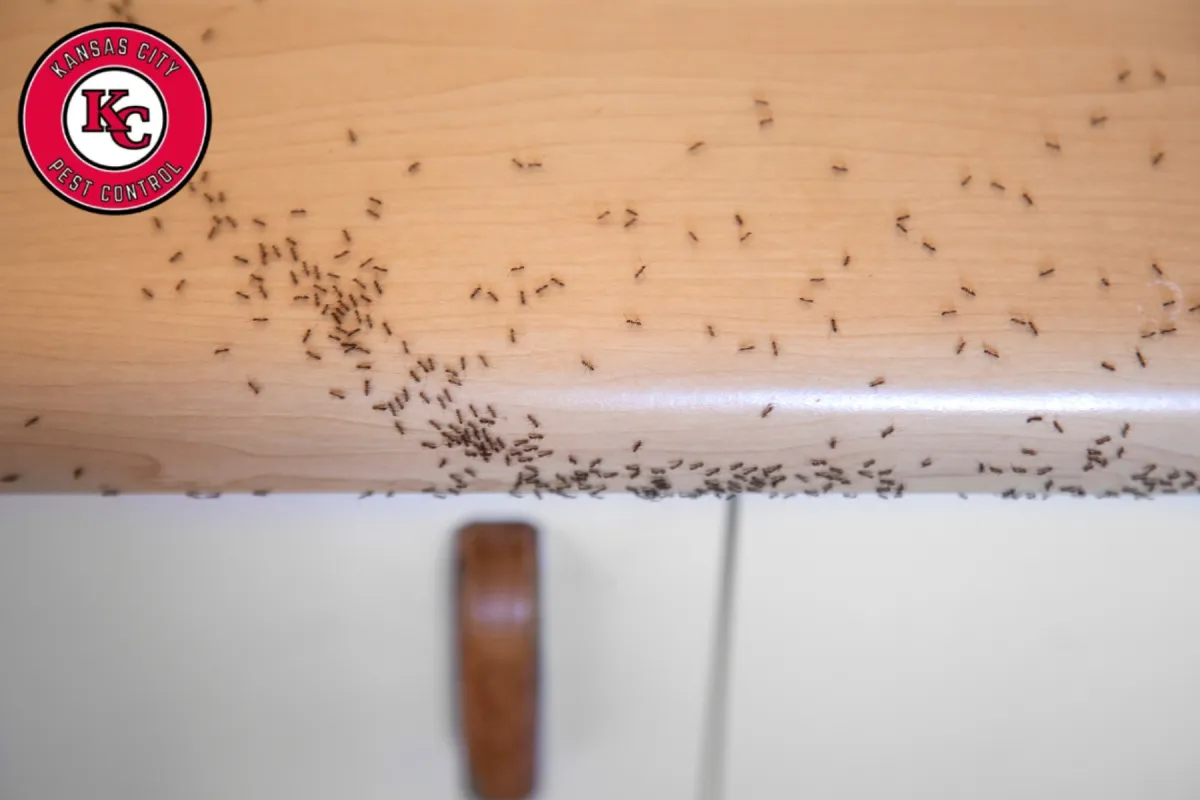
Bait placed far from active trails may not be discovered. Look for routes near baseboards, cabinets, windows, or other areas where activity repeatedly occurs, then follow the label for suitable placement.
Do not place bait where it could contaminate food or food preparation surfaces, or where children and pets can reach it.
3. Sprays Interfere With Baiting
Some sprays can repel ants or kill them before they return to the nest. If feeding stops after another treatment is applied, the products may be working against each other.
Avoid spraying directly on bait or bait-feeding insects unless the product directions specifically allow it. If you are unsure how to combine treatments, ask a qualified pest control professional.
4. More Than One Nest May Be Involved
Some species form multiple nests or colonies. Treating one visible trail may not address activity in another part of the building or outdoors.
When the problem keeps returning, additional nests, hidden entry points, or available food sources may be contributing to it. A wider inspection can help identify what needs attention.
How to Choose the Right Ant Control Method
If you are unsure whether to use bait or spray, start by checking where the insects are active and what may be attracting them.
- Identify activity areas. Note whether insects appear near food, sinks, windows, doors, or exterior walls.
- Look for trails. Observe where they travel and whether they return to the same food or moisture source.
- Remove competing food. Store food in sealed containers, clean spills, and secure pet food.
- Choose a suitable product. Check that the bait or spray is labeled for the target pest and intended treatment location.
- Avoid conflicting treatments. Do not spray directly over bait or bait-feeding insects unless the product directions permit it.
- Monitor the results. Follow label instructions for checking, replacing, or reapplying a product.
- Get help if activity continues. Recurring problems may require species identification, a closer look at nesting areas, and a broader treatment plan.
Important Ant Control Terms to Know
- Ant bait: A product that combines an attractive food source with an ingredient designed to control insects that feed on it.
- Contact insecticide: A product designed to kill insects when they come into direct contact with it.
- Residual insecticide: A product intended to remain active on a treated surface for a period specified on its label.
- Bait acceptance: The extent to which insects find and feed on a particular bait.
- Colony: A group that may include workers, young ants, and one or more queens, depending on the species.
- Integrated pest management (IPM): An approach that combines inspection, monitoring, sanitation, exclusion, and suitable pest control methods.
Common Ant Control Myth: Spraying More Means Faster Results
Myth: Spraying more insecticide or treating every trail will eliminate the colony faster.
This is not always true. Sprays can kill exposed insects, but the nest may remain active in a hidden area. Some products can also repel insects or disrupt bait feeding, making bait less effective.
Using more product than directed does not guarantee better control and can create unnecessary risks for people, pets, and the environment. Always follow the product label.
A better approach is to identify the species, check where the insects travel, reduce food sources, and choose a suitable treatment. If activity keeps returning, the problem may require more than another round of spraying.
Applying Our Ant Control Approach: Over 20 Years of Experience, Integrated Pest Management, and Targeted Treatments
Kansas City Pest Control draws on over 20 years of experience and an integrated pest management (IPM) approach to address ant infestations. According to the company’s service information, its technicians inspect the property to identify the type of infestation, where activity occurs, available food sources, and conditions that may allow the problem to continue.
Over 20 Years of Experience
Different species have different feeding habits and nesting patterns. Identifying the likely species and locating activity can help determine which treatment methods are appropriate.
Kansas City Pest Control uses inspection findings to guide its recommendations rather than relying on the same treatment for every situation. The aim is to address the current infestation and identify conditions that may contribute to recurring activity.
Integrated Pest Management
IPM combines inspection with suitable chemical and non-chemical methods. Instead of focusing only on visible insects, the approach also considers where they are nesting, how they enter the building, and what attracts them.
Depending on the property, the process may include:
- Identifying trails and likely nesting areas.
- Checking for accessible food and moisture sources.
- Recommending sanitation steps to reduce competing food.
- Identifying gaps that may allow entry.
- Selecting appropriate bait or insecticide products.
- Monitoring activity and determining whether follow-up is needed.
These steps help make treatment decisions more specific to the property and the type of infestation.
Choosing Between Baits and Insecticides
Baits and insecticides serve different purposes. Bait may help affect colony members when insects accept and share the product, while an appropriate spray may be useful for direct treatment or approved residual applications.
Kansas City Pest Control uses inspection findings to help guide product selection and placement. Products should be applied according to their labels, with care taken around children, pets, food, and other sensitive areas. No single method works best for every species or property.
For homeowners looking for pest control in Overland Park, a professional assessment can help identify the likely cause of recurring activity and explain which treatment options may be suitable.
People comparing Overland Park pest control services for homes, rental properties, or businesses should look for a provider that explains its findings, treatment plan, safety precautions, and any recommended follow-up.
People Also Ask:
Is ant bait better than insecticide spray?
Ant bait may be more useful when the goal is to affect the colony, provided the insects accept and share the bait. Sprays may kill exposed insects more quickly. The better option depends on the species, location, and extent of the infestation.
How long does ant bait take to work?
Some baits take several days or longer to reduce activity because insects need to find and feed on the product. Timing varies by product, species, colony size, and placement. Follow the label instructions.
Why do ants keep coming back after spraying?
Sprays may kill visible insects without reaching the nest or colony. Other nests, entry points, and available food sources may also contribute to recurring activity.
Can I use ant bait and insecticide spray together?
Sometimes, but it depends on the products and where they are applied. Some sprays can repel insects or interfere with bait feeding. Follow both product labels and consult a pest control professional if you are unsure.
Where should I put ant bait?
Place bait near active trails or feeding areas where the product label permits. Keep it away from children, pets, food, and surfaces where contamination could occur.
What should I do if ants ignore the bait?
Check whether other food sources are available, whether the bait is accessible, and whether it suits the species. Avoid adding treatments that could interfere with baiting unless the label or a qualified professional recommends them.
Get Help Choosing the Right Ant Control Method
Baiting and insecticide sprays serve different purposes. Baits may help target colony members when insects accept and share the product, while sprays can provide faster control of those that contact the treatment. The right choice depends on the species, the location, and the conditions supporting the infestation.
Consider professional help if activity keeps returning, appears in several areas, or the source is unclear. If you need an exterminator in Overland Park, a professional inspection can help identify likely activity areas and suitable treatment options.
Kansas City Pest Control provides ant control services for residential and commercial customers. The company emphasizes inspection, targeted treatments, and clear communication to help customers understand their options. Treatment choices should reflect the property and follow appropriate product safety directions, especially in homes with children or pets.
If you have tried bait or sprays and the problem keeps returning, a professional assessment can help identify what may be causing the activity and what to do next. Contact us today to discuss your ant control needs. Discuss the signs you have noticed and get guidance on the next steps for your property.