
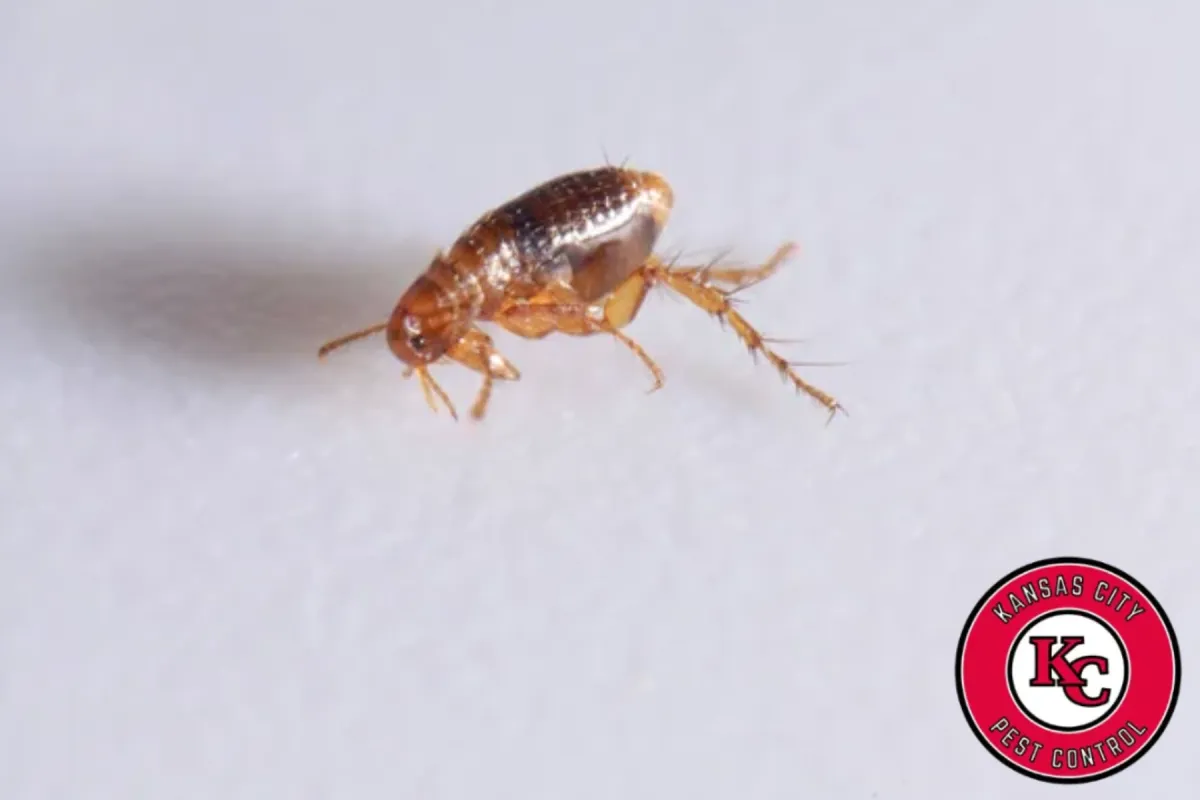
An Insect Growth Regulator (IGR) is necessary to stop a flea infestation from returning because standard insecticides only kill adult fleas, leaving behind eggs and larvae that make up 95% of the population. By mimicking natural hormones, an IGR prevents these immature fleas from maturing or reproducing, effectively breaking the life cycle and ensuring a new generation doesn’t emerge weeks later. To achieve a truly pest-free home, you must combine an adulticide for immediate relief with an IGR for long-term prevention.
The Invisible 95%: Why Adulticides Alone Aren’t Enough
Most over-the-counter sprays and foggers are “adulticides.” This means they are designed to kill the biting fleas you can actually see jumping on your pet or on your ankles. While this provides a moment of relief, it is often a false sense of security. Adult fleas represent only about 5% of the total infestation living in your home.
During a recent property inspection for a family in Independence, we found they had used three different store-bought foggers over a month. Every time, the biting stopped for a few days, only to return even worse. This happened because the foggers didn’t touch the thousands of eggs and larvae buried deep in the carpet fibers. To stop the cycle, you have to treat the unseen 95%.
The 4 Stages of the Flea Life Cycle
- Eggs: These are laid on your pet but fall off wherever the animal walks. They make up roughly 50% of the population.
- Larvae: These look like tiny worms and burrow deep into rugs or cracks in hardwood floors to avoid light. They make up 35% of the problem.
- Pupae (The Cocoon): The “armored” stage. The flea is protected by a silk-like cocoon that is resistant to most chemicals. They represent 10% of the infestation.
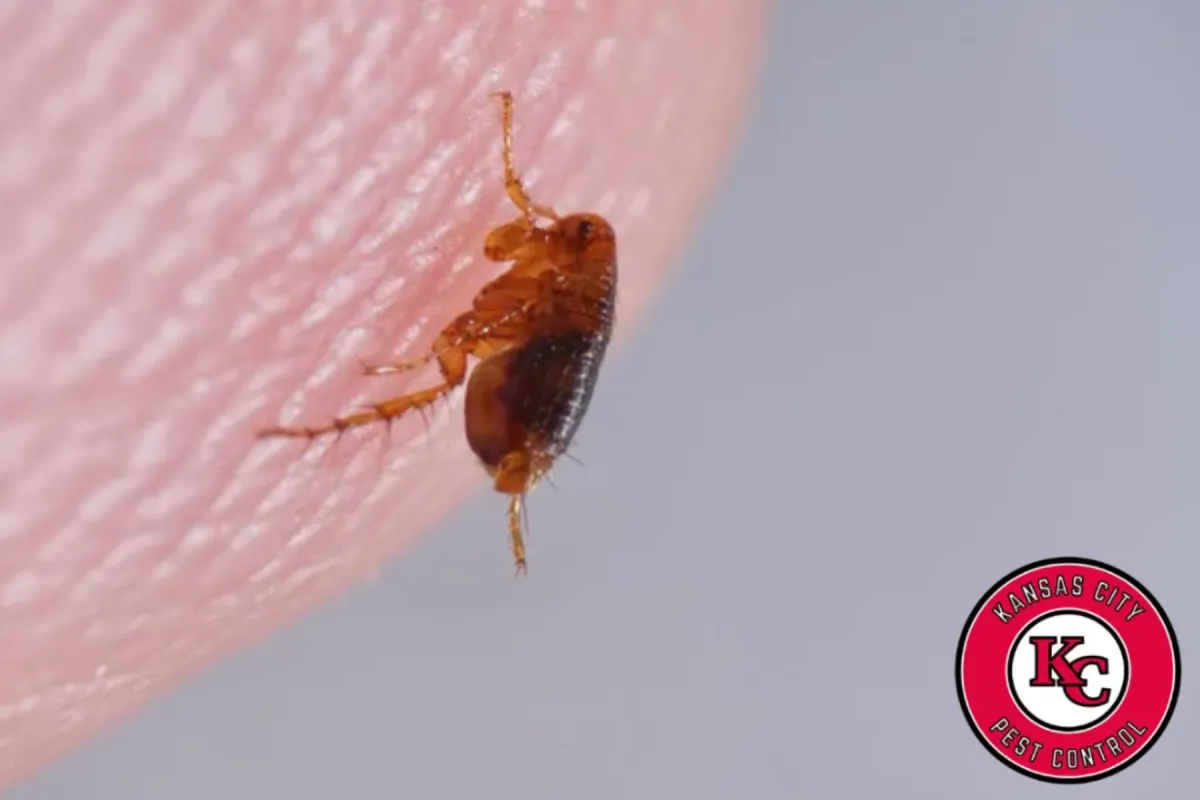
- Adults: The biting stage that lives on your pet. This tiny group is only 5% of the total colony.
Comparison: Standard Insecticides vs. IGRs
Understanding the difference between a “quick kill” and a “permanent solution” is vital. Many people looking for an exterminator in Independence, MO, are surprised to learn that the most important chemical we use doesn’t actually “kill” the bug instantly.
| Feature | Standard Adulticides | Insect Growth Regulators (IGR) |
| Primary Target | Adult biting fleas | Eggs, larvae, and birth control |
| Speed of Result | Immediate (Knockdown) | Delayed (Breaks the cycle) |
| Hormonal Impact | None (Nervous system) | High (Mimics juvenile hormones) |
| Residual Life | Often short-lived | Long-lasting (Up to 7 months) |
| Primary Benefit | Stops current biting | Prevents the “rebound” wave |
Debunking the “One-and-Done” Treatment Myth
A common industry misconception is that a single thorough professional spray should eliminate all fleas forever. In reality, no chemical can reliably penetrate the silk cocoon of the flea pupae. This is known as the “Pupal Window.” Because these cocoons are essentially armored, a new wave of adults often emerges 7 to 14 days after treatment.
Without an IGR present on the floor to act as a safety net, these new adults will simply bite your pets, lay new eggs, and reset the entire infestation. Successful Independence pest control requires the patience to let the IGR sit in the carpet and wait for those late-blooming fleas to emerge into the treated zone.
Solving the Problem with Kansas City Pest Control
At Kansas City Pest Control, we bring over 20 years of service to every home we protect. We don’t believe in temporary fixes. We use a results-driven system that targets every stage of the life cycle at once to ensure the infestation is dismantled from the bottom up.
- Utilizing Insect Growth Regulators: We apply high-grade IGRs like Methoprene or Pyriproxyfen. These stay active in your carpet for up to seven months, ensuring any egg that falls into the rug fails to hatch.
- Using Special Vacuum Cleaners: Before we even apply pesticides, we often perform or recommend deep cleaning. Using special vacuum cleaners with HEPA filters lifts eggs and, more importantly, creates heat and vibration that “tricks” the armored pupae into hatching early, exposing them to our treatments.
- Various Techniques and Pesticides: Every home is different. We use various techniques tailored to your flooring, whether you have deep shag carpet or 100-year-old hardwoods. We choose products that are family-safe while remaining deadly to pests.
- Regional Expertise: We understand the unique challenges of the Missouri climate. If you are looking for pest control in Independence, you want a team that knows how local humidity and seasonal changes affect flea behavior.
During a property consultation, we discovered the infestation was coming from a crawl space where stray animals were sleeping. By treating the yard and the crawlspace with a heavy-duty IGR along with the interior of the home, we provided a lasting solution that store-bought sprays couldn’t touch.
Technical Specifications & Features
Juvenile Hormone Analog (JHA)
The specific type of IGR we use. It “tricks” the flea larvae into thinking they aren’t ready to grow up. They stay in a juvenile state and eventually die without ever becoming biting adults.
Chitin Synthesis Inhibitor (CSI)
Another form of IGR that prevents the flea from building its “shell” or exoskeleton. Without a shell, the flea cannot survive its next growth phase.
Residual Stability
Professional-grade IGRs are highly stable. They bond to the base of your carpet fibers and stay active for months, even with regular foot traffic.
People Also Ask (FAQ)
Is an IGR safe for my cat or dog?
Yes. IGRs target specific hormones that only insects have. Because humans, dogs, and cats don’t have these same hormonal pathways, the products have a very high safety margin for families and pets.
Why am I still seeing fleas a week after the exterminator left?
This is the “Pupal Window.” These are the fleas that were protected in their cocoons during the spray. If an IGR was used, these new fleas cannot reproduce, and they will die shortly after contacting the treated floor.
Do I need to keep vacuuming after the treatment?
Yes! The vibration from the vacuum tells dormant pupae that a “host” is nearby. This makes them hatch and jump onto the floor where the IGR and adulticide are waiting for them.
Secure Your Home with Kansas City Pest Control
A flea infestation can make your home feel like a battlefield. At Kansas City Pest Control, we are dedicated to providing safe, efficient, and lasting solutions. We pride ourselves on transparency, integrity, and over 20 years of experience in the community.
Ready to break the cycle for good?
Trust the team with the regional expertise to handle your home with care. We offer honest pricing and results you can count on. Contact us today.