
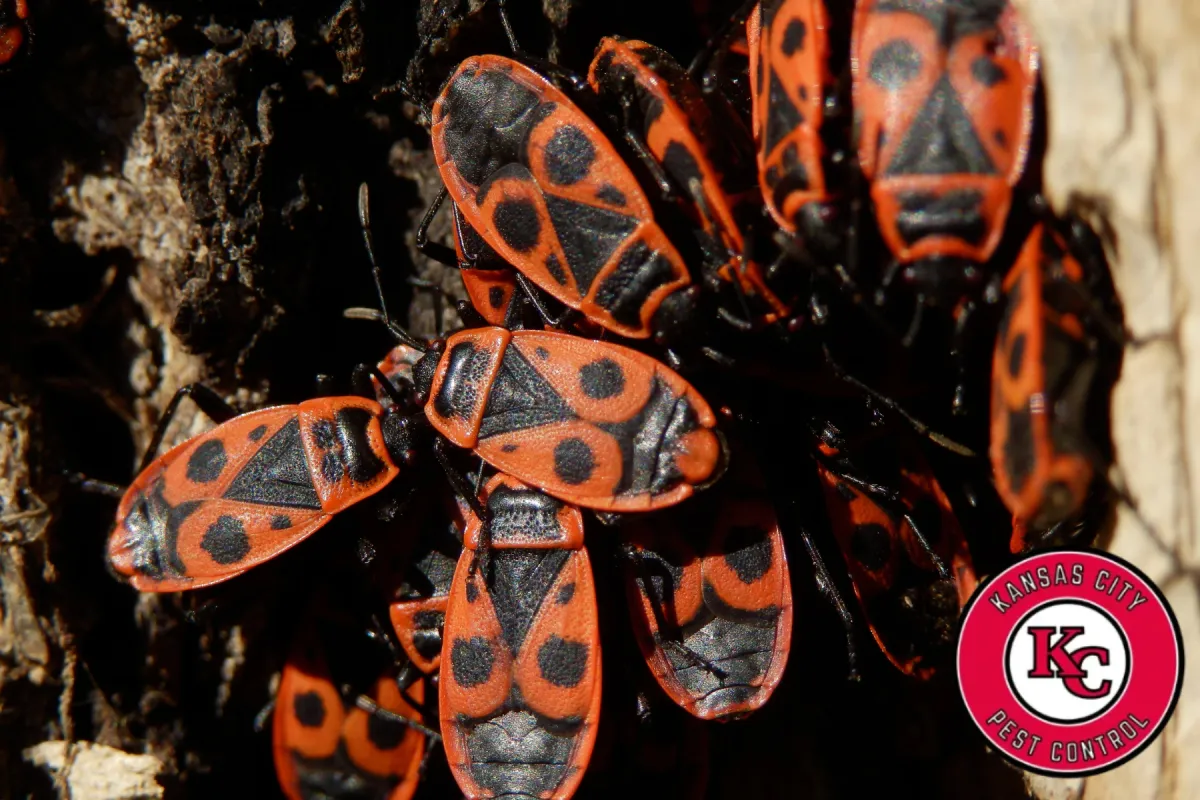
To stop boxelder bugs from gathering on your house, you must seal exterior structural gaps, spray a residual barrier on sun-warmed siding, and clear nearby female boxelder tree debris. These insects cluster on warm south- and west-facing walls in autumn to find shelter before migrating inside to hibernate.
Discovering thousands of bright red and black insects swarming over your home’s siding can be an incredibly unsettling experience. As summer transitions into early autumn, homeowners often wake up to find their sunny exterior walls completely covered by these active, congregating pests. If your walls have suddenly become a popular rest stop for local insect populations, you are witnessing a natural, seasonal survival strategy.
Every year, these temperature-sensitive insects begin searching for a secure place to spend the winter months. These pests, commonly known as boxelder bugs, spend the warm spring and summer seasons feeding quietly in the high branches of female boxelder, maple, and ash trees. Once the nighttime air turns crisp, they instinctively fly to the nearest tall, sunlit structure to absorb heat. If your home stands out in the neighborhood, its sun-warmed walls will quickly draw them in by the hundreds.
If you live in the historic neighborhoods of Independence, your home’s mature maple trees and sunny vinyl siding can make your property a prime target for these insects during the change of seasons.
Visual and Behavioral Comparison: Boxelder Bugs vs. Common Lookalikes
Before you attempt to treat an infestation on your siding, it is critical to identify the specific insect you are dealing with. Several fall-invading pests look highly similar at a glance but have completely different behaviors, feeding habits, and potential to cause indoor damage.
Staining and Invasion Comparison Matrix
| Pest Feature | Boxelder Bug | Brown Marmorated Stink Bug | False Chinch Bug |
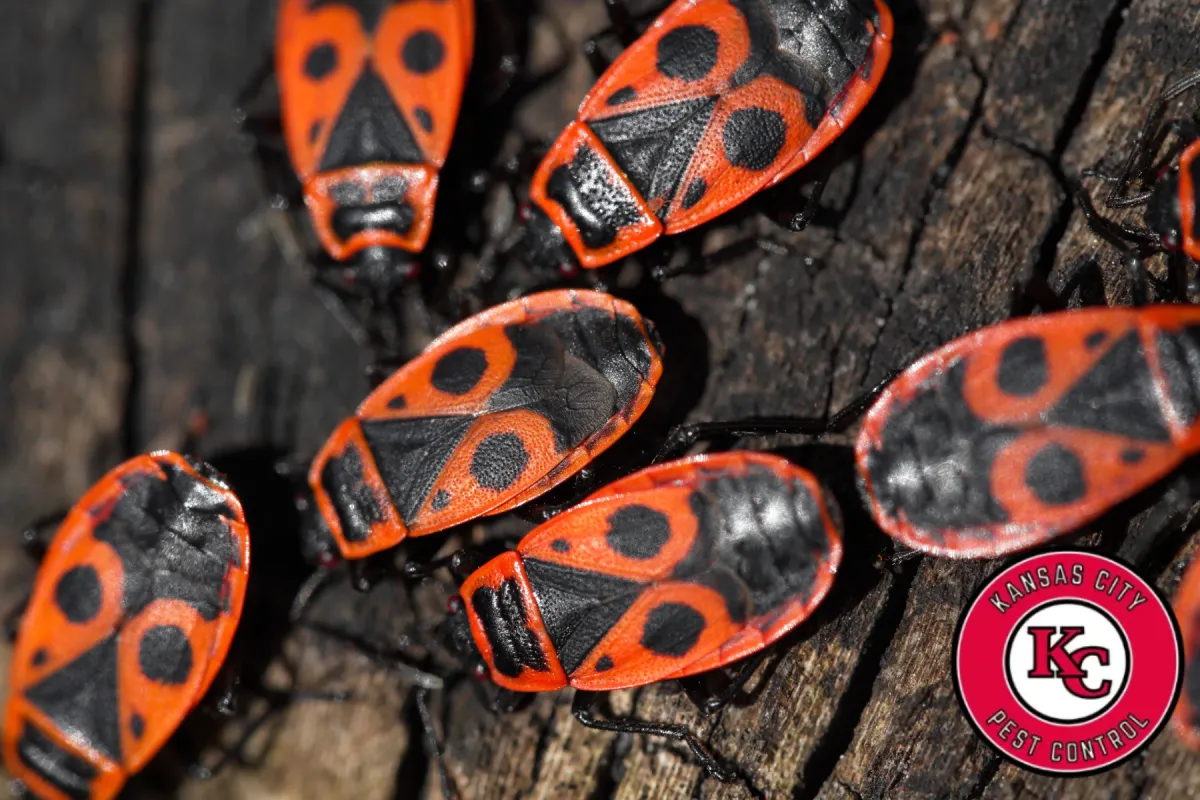
| Physical Appearance | Flat, black oval body with distinct red-orange markings along the edges and back | Shield-shaped, mottled brown and grey body with white-banded antennae | Tiny, slender, grayish-brown body with clear wings |
| Primary Attraction | Sun-heated siding, reflective windows, and nearby female boxelder trees | Light, warmth, and fruit/vegetable gardens | Dry, weed-heavy yards and decaying agricultural vegetation |
| Indoor Damage & Staining | High (Feces leave bright orange/brown spots on curtains and walls) | Low (Mainly a physical nuisance, though they emit a highly pungent odor when crushed) | Negligible (Rarely enter in massive numbers; do not stain fabrics) |
| Siding Preference | South- and west-facing light-colored siding or brick | Under roof eaves, soffits, and dark window frames | Low to the ground on foundation blocks and low siding panels |
Correctly identifying the species prevents you from using the wrong treatment methods. If you are unsure of the species covering your siding, consulting a local specialist for pest control in Independence is the most reliable way to avoid making costly mistakes with incorrect sprays. A professional assessment ensures that you tackle the specific behavioral patterns of the target pest rather than spraying broad-spectrum products blindly.
The Step-by-Step Reasons Why Boxelder Bugs Target Your Home
Large clusters of these pests do not gather on your walls by accident. Their behavior is driven by a highly coordinated biological response to changing weather, structural layouts, and nearby plant life.
1. The Search for Thermal Heat Zones
As cold-blooded creatures, these pests rely on external sources to regulate their body temperature. Siding surfaces, especially light-colored vinyl, dark painted wood, or brick, absorb solar energy throughout the day, remaining warm long after the sun goes down. This heat retention creates a warm micro-climate that makes your home the ultimate cozy shelter.
2. Proximity to Host Trees
If your yard or a neighboring property contains female boxelder trees, you are highly likely to experience seasonal pest pressures. The insects feed on the seeds and leaves of these trees all summer, then migrate a short distance to the nearest tall structure when temperatures drop.
3. Pheromone Signalling Networks
Once a few scouting insects locate a highly suitable, warm wall, they release powerful aggregation pheromones. This chemical scent trail acts as an open invitation, attracting hundreds of other insects from the surrounding area to the same spot. Within a few days, a small cluster can easily grow into a massive swarm.
4. The Search for Overwintering Voids
The bugs are not just sunbathing on your siding; they are actively searching for a way inside. They crawl along your exterior walls looking for tiny gaps, unsealed utility lines, loose soffits, and siding joints that lead directly into your home’s warm wall insulation, where they can sleep comfortably until spring.
Debunking the Myth: “Boxelder Bugs Are Actively Eating and Destroying Your House”
When homeowners see thousands of black-and-orange bugs covering their siding, they often panic and assume their home’s structural integrity is in immediate danger.
The Reality: Unlike termites, carpenter ants, or even carpet beetles, these pests are completely incapable of structural damage. They do not possess chewing mouthparts; instead, they have a straw-like sucking beak designed solely for piercing soft plant seeds. They do not eat wood, drywall, insulation, or wiring. While they do not cause structural harm, their sheer numbers can be overwhelming, which is why working with an exterminator in Independence, MO before temperatures plummet is a smart move to prevent indoor staining. An expert can clear the bugs and secure your property before they find their way into your living spaces.
Applying Our Specialized Protocols to Secure Your Home
At Kansas City Pest Control, we believe in treating pest pressures with targeted, biological-first protocols. We avoid using heavy traditional methods that leave harsh odors or residues around your living spaces. Instead, we implement a detailed, strategic approach that prioritizes structural safety, family health, and lasting environmental peace of mind.
Sealing any entry points: We focus heavily on physical exclusion, sealing any entry points along your foundation, window frames, and utility lines using professional-grade silicone caulk and copper mesh to prevent pests from squeezing into your wall voids.
Exterminators have the necessary experience, training, and tools: Our certified exterminators have the necessary experience, training, and tools to diagnose complex pest migrations, map out entry pathways, and apply targeted barriers with absolute precision.
Insecticides: We select highly targeted, low-impact products rather than relying on heavy, broad-spectrum chemicals. Our focused insecticides are applied to crawlspaces and exterior junctions to halt active migrations safely.
Baits: We utilize advanced, species-specific baits to manage insect populations naturally before they have a chance to swarm toward your siding.
Traps: We deploy custom mechanical and pheromone-based traps in sensitive perimeter zones to capture active crawling pests and monitor population levels safely.
By combining these methods, our team provides a safe, chemical-conscious alternative to traditional pest control. We help local property owners protect their homes from seasonal swarms while keeping families and pets out of harm’s way. Our specialists focus on offering targeted Independence pest control services that keep your living spaces completely secure.
People Also Ask
Do boxelder bugs bite humans or carry diseases?
No. These pests are not known to transmit diseases, and they do not possess stingers or biting jaws. On rare occasions, if handled roughly, they may pinch the skin with their sucking mouthparts, causing a minor, harmless red spot similar to a mosquito bite.
Will spraying them with soapy water keep them away permanently?
No, soapy water is only a contact killer. While spraying a mixture of dish soap and water directly onto active clusters will break down their waxy outer shells and kill them, it leaves zero residual defense. As soon as the water dries, new bugs will land on the exact same spot.
Can boxelder bugs breed or multiply inside my walls during the winter?
No, they cannot reproduce indoors. They enter your walls strictly to hibernate (a state called diapause). Because they do not feed during the winter, they remain dormant inside your wall voids until spring, when they try to crawl back outside to mate.
Why are these bugs suddenly appearing inside my house during a warm winter day?
On unusually warm winter days, the temperature inside your wall voids can rise. This warmth tricks the hibernating insects into thinking that spring has arrived. They wake up from their dormant state and follow the warmth inward toward your heated living rooms, appearing on windows and ceilings.
Conclusion & Next Steps
Getting rid of boxelder bugs requires blocking their path before they can transition from your warm siding into your insulated walls. By combining professional-grade exterior barriers with precise exclusion sealing, you can keep your home peaceful and stain-free.
As a professional and reliable pest control company, Kansas City Pest Control is committed to providing effective, tailored solutions for each customer. Our core belief is delivering high-quality, eco-friendly treatments that keep your property pest-free while keeping your family and pets safe. We stand out by offering personalized, hands-on care specifically customized to your unique needs, giving you total confidence and reassurance.
Protect Your Home Today
Do not let an active swarm of overwintering bugs jeopardize your family’s comfort this season. Contact us today to request your professional consultation or schedule a service.